
Recent updates to the British Columbia Building Code now require radon rough-ins in new homes. This is a positive step for health and safety—but it’s often misunderstood.
Radon is a naturally occurring gas found in soil that can enter homes through foundation cracks and openings. Long-term exposure is a leading cause of lung cancer, which is why mitigation matters.
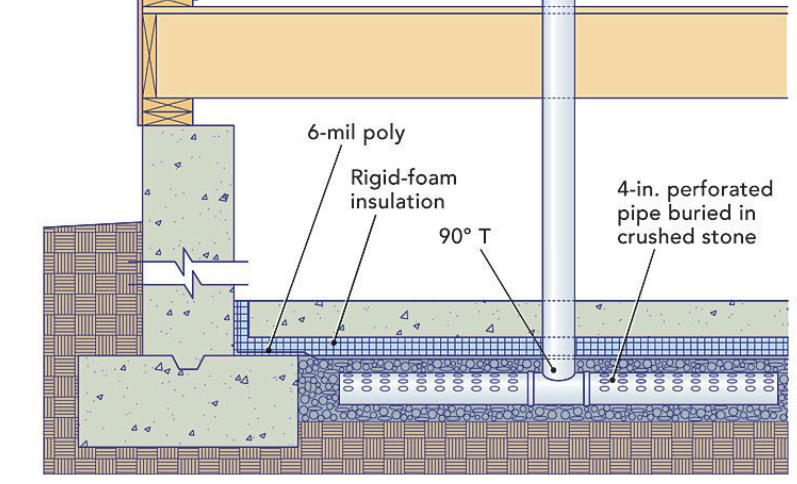
A radon rough-in is essentially a pre-installed pipe system beneath the slab that allows radon gas to be vented outside. It typically includes a vertical pipe running from under the foundation up through the home, along with provisions for adding a fan later. However, it’s important to understand that a rough-in is not an active system.
Without a fan, the system may not effectively reduce radon levels.
For buyers, this means a newer home isn’t automatically “radon-safe.” The only way to confirm levels is through proper testing, which typically takes about a week.
The good news is that if elevated levels are found, activating the system is usually straightforward.
Bottom line: the rough-in is a great start—but testing is still key.